


OutdoorClass: Hunting Courses
4.639.00 Reviews
App Specs
- Version
- 10.200.1
- Updated On
- License
- Free
- Downloads
- 10,000+
- Developer
- Outdoor Class
- Categories
- Travel & Local
- Platform
- Android
Screenshots
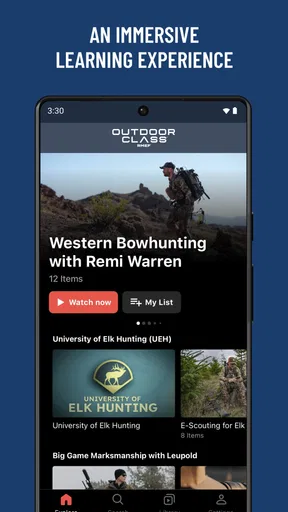
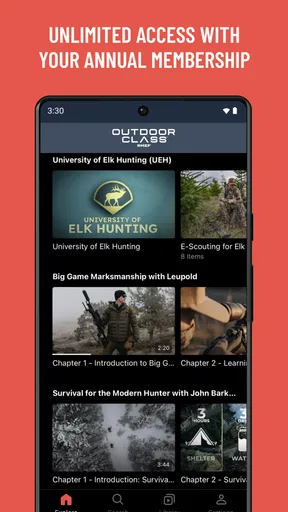
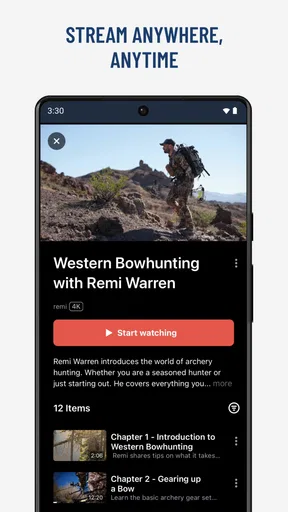

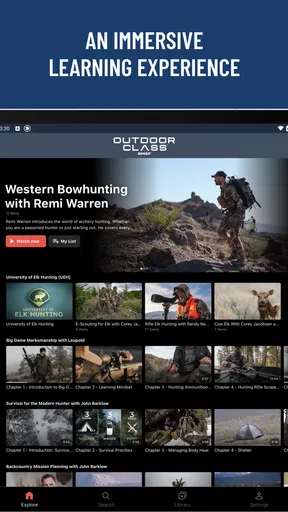
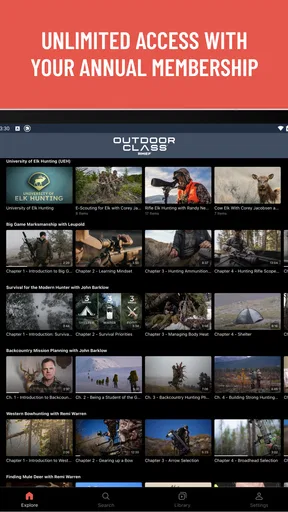
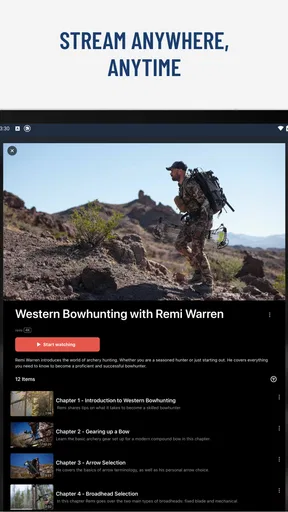
 Analysis by AppCompare
I approached OutdoorClass: Hunting Courses as a learning app rather than a typical travel utility. It comes from Outdoor Class and sits in the Travel & Local category, but its real purpose is education: helping people build knowledge around hunting, cooking, and calling through lessons from experienced specialists. After spending time with it, I found that its value depends less on quick map-style answers and more on whether you are willing to learn in stages, revisit ideas, and apply them outside the screen.
The app is free to install, carries a Teen content rating, and has reached over 10K installs. Its average rating is 4.6 from more than a hundred ratings, which suggests that its focused audience generally responds well to the concept. That audience matters here. This is not an all-purpose travel companion, and I would not recommend it to someone looking for trail navigation, campsite reservations, or instant local recommendations. I would recommend it to a curious beginner, an improving hunter, or an outdoors person who wants structured instruction instead of piecing everything together from scattered videos.
How the learning experience fits real outdoor routines
The strongest part of the concept is its attempt to turn outdoor knowledge into something you can study before you need it. Hunting decisions often happen in conditions where there is little time to search, compare explanations, or replay a long discussion. Learning beforehand gives you a chance to think through technique at home, then recognize the relevant ideas when you are outside. That makes the app more useful as preparation than as a last-second reference tool.
I especially like the combination of hunting, calling, and cooking. Those subjects connect naturally, but they are not interchangeable. Calling requires attention to timing and situation; hunting instruction involves judgment and field awareness; cooking shifts the focus to what happens after the outing. Moving among those areas can make the learning feel more complete than an app that concentrates only on equipment or only on field tactics.
The app’s approach also suits people who learn better from guided instruction than from random searches. General video platforms are full of outdoor material, but the quality, order, and purpose can vary widely. One clip may answer a narrow question while leaving out the background needed to understand it. A course-based app gives me a clearer reason to begin, continue, and return to a topic instead of endlessly browsing.
Where a connected session helps most
Connectivity shapes the experience from the moment you start a lesson. When the network is stable, the app is most comfortable in a deliberate setting: at home, in a cabin with dependable service, or anywhere you can give the lesson your full attention. That is when the visual and spoken instruction can support each other without the interruptions that make learning feel fragmented.
This matters because outdoor education is not always something I want to consume in tiny, distracted pieces. A lesson about calling or preparation benefits from concentration. I can pause to think about how the advice relates to my own experience, replay a section if the point is subtle, and make a note of what I want to practice later. A reliable connection makes that rhythm much easier.
Worth Reading Before You Choose

Flipboard Shows What News Apps Must Do Beyond the Feed

Switching to Android Auto Means Rethinking Your Driving Routine

Google Calendar Makes a Crowded Week Easier to Manage

Ludo King Makes the Most of the Minutes Between Plans

Baby Panda World Brings Quick Play to Modern Phones, but Its Game Library Feels Busy

ESPN’s Live Game View Makes Following Close Games Easier
On the other hand, a weak signal changes the app from a teaching tool into a source of frustration. A lesson that stops repeatedly is harder to follow than a short written article, especially when the explanation builds from one idea to the next. I would not begin an important course session immediately before heading into an area where reception is uncertain. My practical advice is to treat connected access as part of the preparation: open the material while you have a good signal and give yourself time to deal with interruptions before the trip begins.
That does not mean the app has no place in a remote lifestyle. It means the timing of use matters. I see it as something to study around an outing, not something I would depend on as my only field reference once I am far from dependable connectivity. For urgent decisions, local regulations, safety guidance, and current conditions, I would use the appropriate official or local sources rather than relying on a course app.
Using it on a phone without turning study into scrolling
A phone is a natural format for this kind of learning because it lets me fit instruction into the gaps around ordinary life. I can study before work, revisit a subject during a quiet break, or prepare for a weekend trip without carrying a separate training library. The small screen is also less intimidating than sitting down at a computer for a formal course, which lowers the barrier to starting.
Still, mobile convenience can encourage shallow use. I found that the app is more valuable when I decide what I am trying to learn before opening it. For example, I might focus on improving my understanding of calling first, then move to cooking once I have a clear reason to change subjects. Without that intention, it would be easy to jump between attractive topics and finish with plenty of viewing but little retained knowledge.
My preferred routine would be simple. I would choose one topic, watch or study it in a quiet place, and immediately write down one practical point to remember. Later, I would connect that point to a real task: checking equipment, planning an outing, reviewing preparation, or thinking through how food should be handled after the hunt. This turns the phone from a passive entertainment screen into a small study aid.
There is also a useful trade-off between portability and attention. A mobile app is easier to reach than a book, but a book can be easier to annotate and consult quickly. Someone who wants a compact, searchable reference may prefer written material. Someone who benefits from seeing and hearing an expert explain a subject may find OutdoorClass more engaging. I would use both approaches rather than expecting one format to replace the other.
What to do when the connection breaks
Connectivity problems are not just technical annoyances here; they can interrupt the logic of a lesson. If a session stops at the wrong moment, I may remember the general topic but miss the qualification that makes the advice useful. That is why I would avoid treating a partially loaded lesson as completed learning. When a connection fails, I would return to the last clear point and review the surrounding material rather than assuming I caught everything.
A practical recovery habit is to study in shorter, intentional blocks whenever the network is unreliable. Instead of starting a long session in a marginal location, I would use a stronger connection to prepare, then keep the outdoor portion focused on applying what I already understood. If I notice repeated interruptions, I would stop rather than repeatedly restarting the same material. That saves battery, data, and patience.
I also recommend keeping expectations realistic about the app’s role during an outing. The courses can help build confidence before you leave, but they should not replace situational awareness, local knowledge, legal requirements, or responsible judgment. A lesson may explain a technique, yet the real environment can introduce weather, terrain, visibility, other people, and changing conditions that no phone session can manage for you.
For a beginner, this distinction is particularly important. I would use the app to form questions and understand basic concepts, then confirm location-specific rules and safety practices through qualified local sources. For an experienced user, the app may be more useful as a way to refine habits or explore a cooking or calling subject that falls outside a normal routine. In both cases, connectivity is best handled before the field situation becomes demanding.
Keeping mobile data under control
Because the app centers on course material, I would pay attention to how and where I use it if my mobile plan is limited. I would prefer a dependable Wi-Fi connection for longer learning sessions and avoid casually opening lessons while traveling unless I know my data allowance can handle it. This is especially sensible when the app is being used as a library for repeated study rather than a one-time visit.
My approach would be to separate preparation from travel. At home, I would explore the available subjects, decide which lessons are relevant, and study the material I want before leaving. On the road, I would use the app selectively instead of browsing without a plan. That habit reduces unnecessary loading and makes the time spent with the app more purposeful.
I would also keep the phone’s practical limits in mind. Long viewing sessions can use battery, and outdoor trips already place extra demands on a phone. Bright screens, searching, and repeated attempts to load interrupted material all add friction. A short, planned session is more sensible than expecting the handset to serve as a full-time classroom and field companion.
The free entry price makes experimentation easy, but the financial side deserves attention if you decide to go deeper. The app includes in-app purchases listed at $69.99 per item. I would not commit to a purchase simply because I enjoyed the first few lessons. I would first decide whether I can realistically follow a course, whether the subject matches my goals, and whether I prefer this teaching format over free videos, books, or local instruction. For a serious learner, a focused paid course may be worthwhile; for occasional curiosity, the free access may be enough.
Who will get the most from Outdoor Class
I think the best match is someone who wants a guided path. A newcomer can use it to gain vocabulary and context before asking more advanced questions. An intermediate hunter may appreciate having a structured way to revisit calling or learn more about cooking. Someone who spends time outdoors with friends or family can also use it to prepare more thoughtfully instead of relying entirely on informal advice.
The cooking side gives the app a wider use case than hunting instruction alone. It connects the outdoor experience with what happens afterward, which can encourage a more complete view of the activity. I would particularly value that if I wanted to improve not only how I prepare for an outing, but also how I handle the result responsibly and make better use of it at home.
The less suitable audience is just as clear. I would skip this app if my main need were turn-by-turn navigation, weather alerts, public-land information, license details, or emergency communication. I would also skip it if I dislike lesson-based learning and only want a quick answer in the field. A search engine, a dedicated navigation app, an official wildlife resource, or a local instructor would be better for those jobs.
It is also not a substitute for hands-on mentoring. Watching instruction can help me understand a method, but practice, feedback, and local experience still matter. If I were completely new to hunting, I would pair the app with a responsible, knowledgeable person rather than treating the phone as my sole teacher.
How it compares with common alternatives
Compared with general video platforms, OutdoorClass feels more purposeful because the subject matter is concentrated around outdoor skills. The advantage is less time spent filtering unrelated material. The disadvantage is that a broad platform may offer more viewpoints, more niche answers, and easier access to informal demonstrations. I would choose OutdoorClass when I want a guided learning path and a general platform when I need to investigate a very specific question.
Compared with books, the app is more approachable for people who learn through demonstration and spoken explanation. Books are often better for quiet reference, highlighting, and conserving battery or data. I would use a book when I need a durable written reminder and the app when I want instruction that feels more like being shown how something works.
Compared with local classes or a mentor, the app is more flexible and private. I can study when my schedule allows, without coordinating with another person. Local instruction wins when the lesson needs to reflect regional conditions, personal feedback, or immediate correction. The two options complement each other rather than competing directly.
The developer, Outdoor Class, has positioned the product as a specialist learning experience rather than a broad outdoor toolbox. That focus is its identity and its limitation. The current version is 10.200.1 and supports Android 8.0 or later, so people using an older device should check compatibility before planning around it. For supported phones, the key question is not whether it can replace every outdoor app, but whether its course-centered approach fits the way you want to learn.
My connectivity verdict
After weighing the useful teaching focus against the practical demands of mobile access, I see OutdoorClass as a preparation app first. Its best moments happen when I have a stable connection, enough attention to follow a lesson, and a clear reason for studying that subject. It is less convincing as an improvised field companion in places where service is uncertain or where I need immediate, location-specific information.
The most effective workflow is straightforward: choose a topic before the trip, study it while connected, write down the key lesson, and apply it carefully in the real world. If the connection becomes unreliable, stop trying to force a long session and return to it later under better conditions. That approach respects the limits of a phone while still making good use of its portability.
My recommendation is conditional but positive: I would suggest it to anyone who wants organized learning around hunting, calling, and cooking, especially if they enjoy expert-led instruction and can study primarily over a reliable connection. I would not present it as a navigation tool, an emergency resource, or a replacement for local guidance. Used with those boundaries in mind, OutdoorClass: Hunting Courses offers a practical way to prepare, build better questions, and approach outdoor activities with more understanding than casual browsing usually provides.
Pros
- Expert-led lessons cover practical hunting skills and field safety.
- Video-based courses make learning convenient on a flexible schedule.
- Useful for beginners seeking structured guidance before their first hunt.
- Content can help hunters prepare for different species and environments.
- Course format lets users revisit difficult topics whenever needed.
Cons
- Some courses or features may require a paid subscription.
- Lessons may not reflect hunting laws in every state or country.
- Practical field experience cannot be fully replaced by online instruction.
- Content may focus mainly on North American hunting practices.
- A reliable internet connection may be needed for streaming lessons.
FAQs for OutdoorClass: Hunting Courses
What is OutdoorClass: Hunting Courses?
OutdoorClass: Hunting Courses is an educational app designed for people who want to improve their hunting knowledge and outdoor skills. It offers guided video lessons, expert instruction, and practical information covering subjects such as hunting techniques, wildlife behavior, gear preparation, safety, and field strategies. The app is intended for beginners as well as more experienced hunters looking to learn at their own pace.
What topics and courses are available in OutdoorClass?
The app includes courses focused on different hunting styles, species, and outdoor activities. Depending on the available catalog and your location, you may find lessons about whitetail deer, elk, turkey, waterfowl, bowhunting, rifle hunting, scouting, tracking, public-land hunting, and wilderness preparation. Many lessons also discuss equipment selection, shot placement, hunting ethics, and ways to become more effective and responsible in the field.
Does OutdoorClass require a subscription or payment?
OutdoorClass generally uses a subscription-based model, so some courses or features may require payment after an introductory offer or limited access period. The exact price, billing period, and included content can vary by platform, region, and current promotion. Before starting a trial, check the subscription terms carefully, including the renewal date, cancellation policy, and whether payment is managed through Google Play or the App Store.
Can I watch OutdoorClass lessons offline?
Offline viewing may be available for selected lessons, depending on the app version, subscription plan, and device. When supported, you can usually download videos while connected to Wi-Fi and watch them later without mobile data or a stable signal. This is particularly useful when preparing for trips in remote areas. Downloaded content may expire or require periodic online verification, so check the app before leaving.
Is OutdoorClass suitable for complete beginners, and does it replace formal training?
OutdoorClass is suitable for beginners because its lessons explain fundamental concepts, equipment choices, preparation, safety, and hunting methods in an accessible format. However, it should be treated as an educational supplement rather than a replacement for local regulations, official hunter-education courses, hands-on practice, or guidance from qualified instructors. Always verify current laws, licensing requirements, seasons, and safety rules before hunting in your area.


